


Kayastha Samaj: the Chitraguptavanshi Kayasthas
कायस्थ समाज — श्री चित्रगुप्त जी महाराज के वंशज (चित्रगुप्तवंशी कायस्थ)
The Kayasthas (also written Kayasth, Kayasta or Kaayastha; Hindi कायस्थ) are a Hindu community of India known through history as writers, record-keepers, scholars and administrators. Most Kayasthas of North India call themselves Chitraguptavanshi or Chitransh (चित्रांश): descendants of Shri Chitragupta ji Maharaj. Today the Kayastha samaj lives in every state of India and around the world.
The Global Kayastha Conference (GKC) is a social organisation that connects Kayastha families everywhere through state chapters, wings for women, youth, business and more, and community events.
Shri Chitragupta ji Maharaj (श्री चित्रगुप्त जी महाराज)
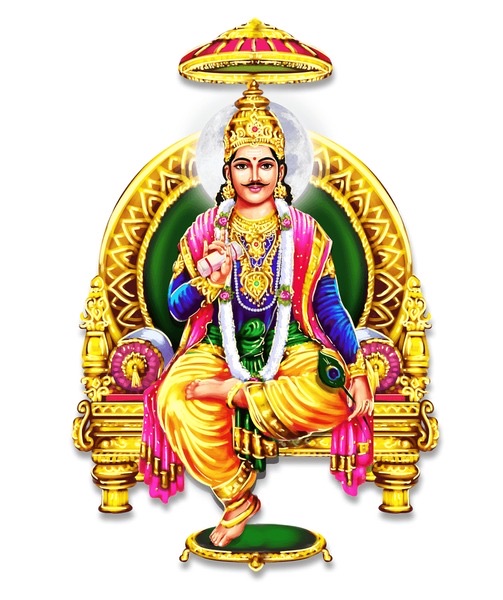
Chitragupta (also Chitragupt, Chitraguptji; चित्रगुप्त, भगवान चित्रगुप्त) is the Hindu deity who keeps the record of every person's good and bad deeds and assists Yama, the god of justice. According to the Puranas, he appeared from the body (kaya) of Lord Brahma holding a pen and an inkpot, which is why his descendants are called Kayastha. Kayasthas worship him as their family deity (kul-devta), and Chitragupta temples are found in many cities, including Ayodhya, Kanchipuram and Patna — see the list of Chitragupta temples with map links below.
Chitragupta temples
Some of the main temples of Shri Chitragupta ji in India. Tap “Google Maps” to see the way to a temple — it opens in the maps app on any phone; on an iPhone you can also choose “Apple Maps”.
Shri Chitragupta Swamy Temple
📍 Nellukara Street, Kanchipuram · Tamil Nadu
One of the best-known temples of Chitragupta ji in India, traditionally dated to the Chola period (about the 9th century).
Shri Dharmahari Chitragupta Mandir
📍 Near Naya Ghat, Ayodhya · Uttar Pradesh
An ancient temple of Ayodhya and a place of pilgrimage for Kayastha families.
Shree Adi Chitragupta Mandir
📍 Nauzar Ghat, Diwan Mohalla, Patna City · Bihar
Old temple on the bank of the Ganga, also known as Kayastha Dham.
Shri Dharmraj Chitragupta Mandir
📍 Ram Ghat, Ujjain · Madhya Pradesh
Temple of Chitragupta ji and Dharmraj (Yama) on the bank of the Shipra.
Sri Chitragupta Devalayam
📍 Kandikal Gate Road, Uppuguda, Hyderabad · Telangana
Old temple in Hyderabad’s Old City, close to Uppuguda railway station.
Shri Chitragupta Maharaj Mandir
📍 Paharganj, New Delhi · Delhi
In central Delhi, a short walk from R.K. Ashram Marg metro station.
Shri Chitragupta Mandir (K.P.)
📍 Mahatma Gandhi Marg, Civil Lines, Prayagraj · Uttar Pradesh
In Prayagraj, the city where the Kayastha Pathshala was founded in 1873.
Chitragupta Temple, Khajuraho
📍 Western Group of Temples, Khajuraho · Madhya Pradesh
An 11th-century Chandela temple, part of the UNESCO World Heritage site. Despite its name, its main image is of Surya, the Sun god.
Know another Chitragupta temple? Send its name and address to support@globalkayastha.com.
How old is the word “Kayastha”? A short history
The name is far older than the Mughal period. Stone inscriptions, copper-plate grants, law books and plays from almost two thousand years ago already speak of the kāyastha — at first as an office (the writer, accountant or record officer of a court or government), and over the centuries as a community whose families carried that skill from one generation to the next.
Evidence through the ages
| Period | What the record shows |
|---|---|
| Kushan era (about 2nd–3rd century CE) | An inscription from Mathura dated in the reign of the Kushan king Vasudeva I was composed by a man described as a Kayastha — among the earliest known uses of the word.1 |
| Law books (smritis) (about 3rd–5th century CE) | The Yajnavalkya Smriti, in its chapter on the duties of a king, tells the ruler to protect his subjects from harassment — naming thieves, cheats and violent men, and also dishonest kāyasthas (royal clerks and accountants). The verse is usually numbered 1.336. The Vishnu Smriti also names the Kayastha as the writer of official documents. In these texts the word still means an office, not yet a caste.2, 3 |
| Classical drama | In Shudraka’s Sanskrit play Mṛcchakaṭika (“The Little Clay Cart”), the courtroom scene of Act IX has a kāyastha sitting beside the judge and writing down the evidence.4 |
| Gupta Empire (442 CE) | An inscription of Emperor Kumaragupta I names a prathama-kāyastha — the “chief Kayastha” or head of the record office — among the officials who approved a land grant.1 |
| Early 6th century | A copper-plate of King Vainyagupta (Gunaighar, Bengal) mentions a karaṇa-kāyastha, a writer of legal documents.1 |
| 7th century (672 CE) | The Apshad inscription of the Later Gupta king Adityasena was written by a Gauḍa-kāyastha — a Kayastha from Bengal — showing Kayasthas being identified by their home region.5 |
| Medieval kingdoms (8th–12th centuries) | Inscriptions of many kingdoms across North, East and Central India name Kayastha families as hereditary scribes, ministers and poets of the royal court. By this time the word had clearly come to mean a community, not only a job.5 |
| Sultanate and Mughal era | Kayasthas learned Persian, the language of government, and served as munshis, revenue officers, accountants and ministers. This long service is why the community is so often linked with the Mughal court — but the word itself is more than a thousand years older. |
| British courts (1860s–1920s) | When courts had to decide inheritance and adoption cases under Hindu law, judges argued over the Kayasthas’ varna. Different courts reached opposite answers: some ruled that Kayasthas were twice-born Kshatriyas; the Calcutta High Court in 1884 (Raj Coomar Lall v. Bissessur Dyal) held that Bengali Kayasthas were not; in 1926 the Patna High Court (Ishwari Prasad v. Rai Hari Prasad Lal) held the opposite — that Kayasthas are not Shudras but twice-born. No single judgment settled the question for every region.6, 9 |
| Social reform (1873 onwards) | The community organised itself for education and reform. The Kayastha Pathshala, founded at Allahabad (Prayagraj) in 1873 by Munshi Kali Prasad “Kulbhaskar”, grew into schools and colleges that still serve students today, and Kayastha associations from many provinces came together in the Kayastha Conference.7 |
Put simply: the Kayastha identity grew out of one of the oldest professions of Indian government — keeping the written record — and it can be traced in Indian sources for well over 1,500 years.
References
- R.C. Majumdar (ed.), The History and Culture of the Indian People, vols. 2–3 (The Age of Imperial Unity; The Classical Age), Bharatiya Vidya Bhavan — Kushan and Gupta administration and inscriptions.
- Yājñavalkya Smṛti, Book 1 (Ācāra-adhyāya), section on the king’s duties, verse 1.336. Translation: Srisa Chandra Vidyarnava, Yajnavalkya Smriti (Sacred Books of the Hindus), Allahabad, 1918.
- Viṣṇu Smṛti (Institutes of Vishnu), ch. 7 on written documents; translated by Julius Jolly, Sacred Books of the East, vol. 7 (Oxford, 1880).
- Shudraka, Mṛcchakaṭika (The Little Clay Cart), Act IX (the trial scene); translated by Arthur W. Ryder (Harvard Oriental Series, 1905).
- B.P. Mazumdar, Socio-Economic History of Northern India (1030–1194 A.D.), Calcutta, 1960 — Kayasthas in early-medieval inscriptions, including the Apshad inscription.
- Hayden J. Bellenoit, “Legal Limbo and Caste Consternation: Determining Kayasthas’ Varna Rank in Indian Law Courts, 1860–1930,” Law and History Review 41(1), 2023, pp. 1–21. doi:10.1017/S0738248023000056.
- Lucy Carroll (Stout), The Hindustani Kayasthas: The Kayastha Pathshala and the Kayastha Conference, 1873–1914 (PhD thesis, University of Chicago).
- Cynthia Talbot, Precolonial India in Practice: Society, Region, and Identity in Medieval Andhra, Oxford University Press, 2001; P.V. Parabrahma Sastry, The Kākatiyas of Warangal, Government of Andhra Pradesh, 1978 — the Kayastha chiefs Gangaya Sahini and Ambadeva.
- Ishwari Prasad and Ors. v. Rai Hari Prasad Lal, Patna High Court, 23 February 1926 (106 Ind Cas 620), Jwala Prasad and Bucknill JJ. — also cites Tulsi Ram v. Behari Lal, ILR 12 All 328, and J.C. Nesfield on the sacred thread.
Chitragupta Puja and Kalam-Dawat Puja
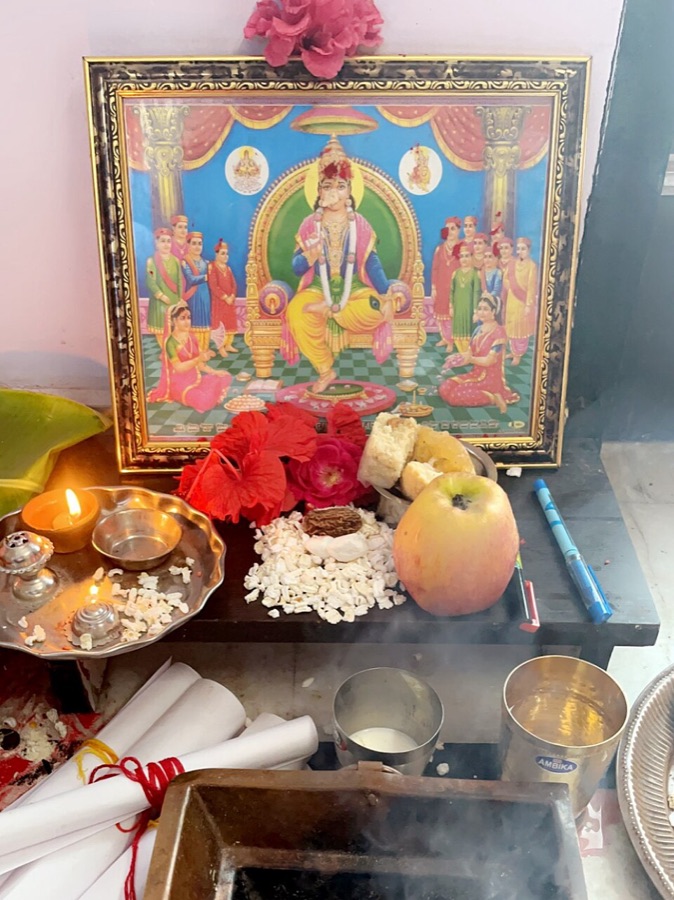
Chitragupta Puja (चित्रगुप्त पूजा; also Chitragupt Puja or Kalam-Dawat Puja, कलम दवात पूजा) is celebrated on Yam Dwitiya (यम द्वितीया), the second day of the bright half of the month of Kartik — the day of Bhai Dooj, two days after Diwali. Families worship the pen, the inkpot and their account books, write the year's income and expenses, recite the Chitragupta katha and aarti, and offer prayers for knowledge and honest work. Many families also call the occasion Chitragupta Jayanti.
GKC chapters hold Chitragupta Puja and community gatherings every year. See them on the GKC event calendar.
The 12 Chitraguptavanshi Kayastha sub-groups
Tradition holds that Shri Chitragupta ji had twelve sons, and the twelve sub-groups (upjati, उपजाति) of the Chitraguptavanshi Kayasthas trace their descent from them. Each sub-group is also a common surname.
| Sub-group | हिंदी | Also written |
|---|---|---|
| Srivastava | श्रीवास्तव | Shrivastava, Srivastav, Shrivastav |
| Saxena | सक्सेना | Saksena |
| Mathur | माथुर | |
| Bhatnagar | भटनागर | |
| Nigam | निगम | |
| Asthana | अस्थाना | |
| Kulshreshtha | कुलश्रेष्ठ | Kulshrestha |
| Ambashtha | अम्बष्ठ | Ambastha, Ambasta |
| Karn | कर्ण | Karna |
| Gaur | गौड़ | Gaud |
| Suryadhwaj | सूर्यध्वज | |
| Valmik | वाल्मीक | Valmiki |
Common Kayastha surnames
Besides the twelve sub-group names, many Kayastha families in North India use surnames such as Sinha, Verma, Prasad, Sahay, Lal, Narayan, Khare, Raizada, Bakshi, Kanungo, Varma, Saran, Swaroop, Dayal and Bahadur. Several of these surnames are also used by other communities, so a surname alone does not tell whether a family is Kayastha.
Kayastha communities across India
Bengali Kayasthas
In Bengal, the Kayastha community is one of the region's oldest. Common surnames include Bose (Basu), Ghosh, Mitra, Guha, Dutta, Dey, Nag, Nandi, Pal, Sarkar and Chowdhury. See the GKC West Bengal chapter.
Chandraseniya Kayastha Prabhu (CKP)
In Maharashtra, the Chandraseniya Kayastha Prabhu (CKP, चान्द्रसेनीय कायस्थ प्रभु) community has a long history of administration and military service; the Pathare Prabhu are a related community of Mumbai. CKP surnames include Gupte, Chitnis, Karnik and Pradhan. See the Mumbai, Pune and Maharashtra chapters.
Karan Kayasthas of Odisha, and Assam
In Odisha the Karan community (surnames such as Patnaik and Mohanty) shares the scribal tradition, and Assam has its own Kayastha community.
Gujarat and the Deccan
The Valmik Kayasthas live mainly in Gujarat, and Mathur and Saxena families served for centuries at the courts of the Deccan, including Hyderabad (Telangana chapter).
Well-known Kayasthas
Kayasthas have contributed to India's freedom movement, literature and public life. Widely known names include Dr Rajendra Prasad, India's first President; Dr Sachchidananda Sinha; Lal Bahadur Shastri; Swami Vivekananda; Netaji Subhas Chandra Bose; Jayaprakash Narayan; Munshi Premchand; and the poet Harivansh Rai Bachchan.
Kayastha samaj near you
GKC has chapters for the Kayastha samaj in these states and cities:
- Kayastha samaj Bihar
- Kayastha samaj Karnataka
- Kayastha samaj Delhi
- Kayastha samaj Rajasthan
- Kayastha samaj Mumbai
- Kayastha samaj Pune
- Kayastha samaj Lucknow
- Kayastha samaj Noida
- Kayastha samaj Ghaziabad
- Kayastha samaj Varanasi
- Kayastha samaj Kanpur
- Kayastha samaj Jharkhand
- Kayastha samaj Haryana
- Kayastha samaj Telangana
- Kayastha samaj Madhya Pradesh
- Kayastha samaj Gujarat
- Kayastha samaj Chhattisgarh
- Kayastha samaj Uttar Pradesh
- Kayastha samaj Maharashtra
- Kayastha samaj West Bengal
- Kayastha samaj Assam
- Kayastha samaj Himachal Pradesh
Join the Global Kayastha Conference — membership is open to every Kayastha aged 18 or over, in India and abroad.
Questions people ask
Who are the Kayasthas?
Kayasthas (also written Kayasth or Kayasta; कायस्थ) are a Hindu community of India, traditionally writers, record-keepers and administrators. Most North Indian Kayasthas regard themselves as Chitraguptavanshi, descendants of Shri Chitragupta ji.
Who is Shri Chitragupta ji?
Shri Chitragupta ji Maharaj (Chitragupt) is the Hindu deity who keeps the record of every person's deeds. Kayasthas worship him as their kul-devta (family deity).
When is Chitragupta Puja celebrated?
Chitragupta Puja is celebrated on Yam Dwitiya, the second day of the bright half of Kartik, which is the day of Bhai Dooj, two days after Diwali. Pens, ink and account books are worshipped (Kalam-Dawat Puja).
What are the 12 Kayastha sub-groups?
The twelve Chitraguptavanshi sub-groups are Srivastava, Saxena, Mathur, Bhatnagar, Nigam, Asthana, Kulshreshtha, Ambashtha, Karn, Gaur, Suryadhwaj and Valmik.
How old is the word Kayastha?
Much older than the Mughal period. A Mathura inscription of the Kushan era (about the 2nd–3rd century CE) was composed by a Kayastha; the Yajnavalkya Smriti and Vishnu Smriti speak of kayasthas as royal record-keepers; and a 442 CE inscription of the Gupta emperor Kumaragupta I names a prathama-kayastha, the chief record officer.
Are Kayasthas Kshatriya or Shudra?
Varna is a matter of personal and family belief. The Constitution of India does not recognise varna ranks, and no Indian law places Kayasthas in any varna. Every Kayastha family is therefore free to follow the tradition it chooses, and GKC welcomes every Kayastha equally.
Many Kayasthas identify with the Kshatriya varna, and several historical pointers support that view:
- High office from the earliest records. In the oldest sources the kāyastha is a state officer. The 442 CE inscription of Kumaragupta I names a prathama-kāyastha, head of the record office, among the senior officials who approved a royal land grant; the Yajnavalkya Smriti places kayasthas in its chapter on the king’s duties.1, 2
- The sword as well as the pen. In 13th-century Andhra, Kayastha chiefs such as Gangaya Sahini and Ambadeva commanded cavalry, governed forts and ruled territory under the Kakatiya kings — the governing and military duties the classical texts link with Kshatriyas.8
- The sacred thread. Kayasthas have long worn the sacred thread (janeu); the Patna High Court in 1926, citing the ethnographer J.C. Nesfield, noted that they had been allowed to wear it “from time immemorial”.9
- Court rulings. Under British rule, judges disagreed. In 1884 the Calcutta High Court (Raj Coomar Lall v. Bissessur Dyal) held that Bengali Kayasthas were not twice-born. In 1890 a judge of the Allahabad High Court (Tulsi Ram v. Behari Lal) expressed strong doubt about that view. In 1926 the Patna High Court (Ishwari Prasad v. Rai Hari Prasad Lal) held that Kayasthas are not Shudras but belong to the twice-born classes, observing that “by origin the Kayasthas are Kshatriyas”.6, 9
How can I join the Global Kayastha Conference?
Anyone from the Kayastha samaj aged 18 or over can join GKC online at globalkayastha.com/membership and connect with their state chapter.
Traditions and family histories differ between regions and families; this page gives commonly held accounts. Corrections and suggestions are welcome at support@globalkayastha.com.